Eolving a Leading Community for Global Studies.
The Network was created to connect analysis of global systems with everyday experience—turning annual convenings into an integrated, year-round platform for publication and collaboration.
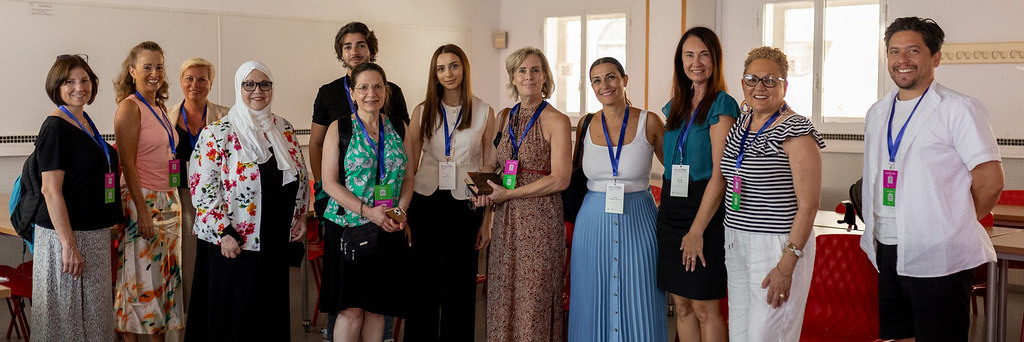
Interpreting economy, politics, culture, and ecology in a rapidly changing world.
The Global Studies Research Network convenes scholars, practitioners, and policymakers to map and interpret the patterns and disruptions of globalization—from shifting trade and finance to migration, media, and climate risk. It is a member-based, scholar-led platform advancing rigorous, interdisciplinary research and dialogue.
Founded in 2008, the Global Studies Research Network emerged at a time when researchers were looking for better ways to understand how economics, politics, culture, and the environment were becoming more tightly linked across borders. From the beginning, the Network has focused on globalization as something lived and contested—not just as an abstract process—asking how global systems shape everyday life and how local actions, in turn, reshape global structures.
International Conference on Global Studies meetings have taken place at the University of Illinois, Chicago (USA); Zayed University in Dubai (United Arab Emirates); Pusan National University in Pusan (South Korea); in Rio de Janeiro, Brazil; Moscow State University (Russia); the India International Centre in New Delhi (India); the Center for Global Studies, Shanghai University (China); Imperial College London (UK); the University of California, Los Angeles (USA); the National University of Singapore (Singapore); the University of Granada (Spain); Jagiellonian University in Kraków (Poland); Concordia University in Montreal (Canada, virtual conferences in 2020 and 2021); the National and Kapodistrian University of Athens (Greece); Oxford Brookes University (UK); and the University of Málaga (Spain). Each conference has addressed a specific theme—such as crisis, big data, the Anthropocene, social movements, biopolitics, migration, and artificial intelligence—tracing how understandings of globalization have shifted over time.
Jan Nederveen Pieterse, the Founding Chair and Editor (2008–2019), drew on his long-standing work on development, inequality, and global change to shape the early direction of the Network. Since 2019, Rafal Soborski has served as Chair and Editor, bringing a focus on ideology, social movements, and green politics. Together, their work has kept the Network attentive to power, justice, and the changing forms of global order and disorder.
Across its history, the Network has welcomed plenary speakers who helped define the field of global studies. Scholars such as George Ritzer, John Urry, Ulrich Beck, Manoranjan Mohanty, Jack Qiu, Annabelle Sreberny, Robin Mansell, and Elżbieta Matynia have offered perspectives on topics like world-systems and consumption, mobilities, risk society, democracy, media and communication, and the public sphere. Their contributions have reinforced the Network’s role as a place where different disciplines approach global questions together.
The Network’s publishing work centers on The International Journal of Interdisciplinary Global Studies, a Hybrid Open Access journal. It publishes research on trade, governance, culture, digital societies, environmental limits, migration, and human rights, among other themes. The journal brings together empirical studies, theoretical reflections, and policy-oriented work, and is designed as a space where different methods and perspectives on globalization can meet. Each year, the Global Studies International Award for Excellence recognizes one article chosen from the highest-rated peer-reviewed papers in the journal. Award-winning articles have examined subjects such as global protest movements, climate and energy politics, migration and borders, digital capitalism, and reconfigurations of power in a multipolar world. The award includes Open Access publication and an invitation to present at a future conference.
Long-form work is supported by the Global Studies Book Imprint, which publishes monographs and edited volumes on topics ranging from global governance and political economy to media systems, culture, and environmental change. The imprint welcomes contributions from established and emerging scholars and offers Open Access options so books can reach readers in universities, NGOs, policy circles, and beyond.
Today, the Global Studies Research Network continues to bring together researchers, teachers, and practitioners who want to understand how the world is changing and how global forces and local lives intersect. Through its conferences, journal, book imprint, and CGScholar community, it offers a member-based, scholar-led space for thinking critically about globalization and for imagining different global futures.
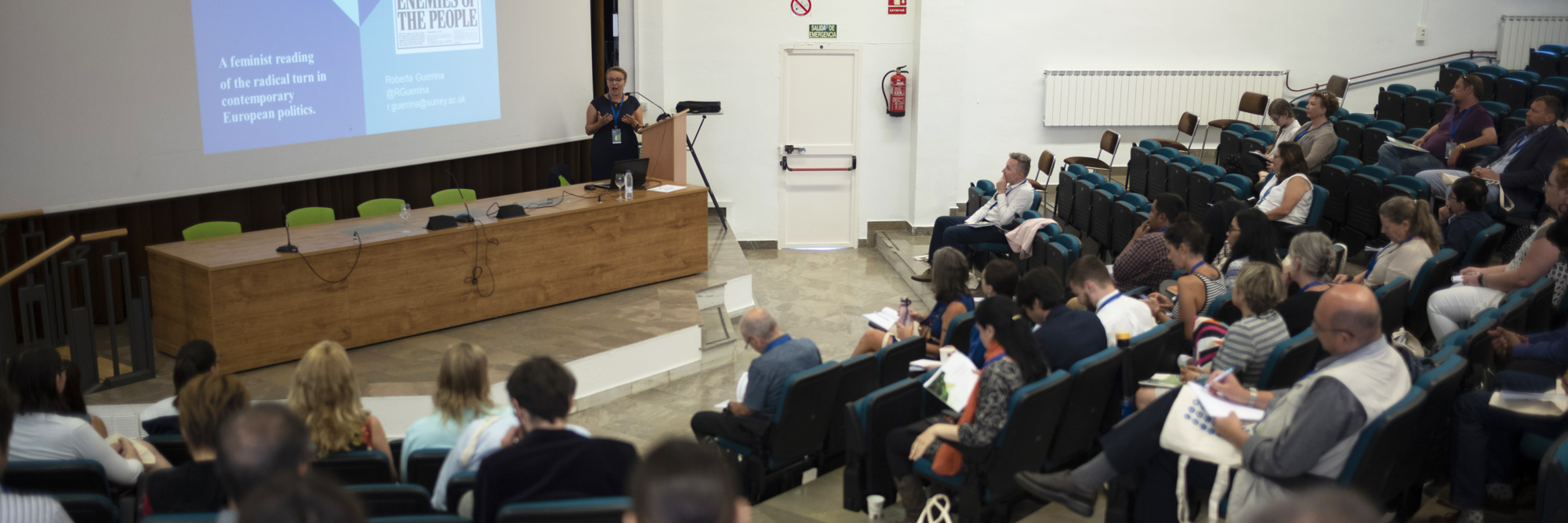
We are thankful for the leadership of the current and pastResearch Network Chairs.

Current Chair and Editor
(2019 - )

Founding Chair and Editor
(2008-2019)
The International Conference on Global Studies has a rich history of featuring leading and emerging voices from the field, including:

Distinguished Professor, University of Maryland, College Park, USA
(2009)

Professor, Lancaster University, Lancaster, UK
(2012)

Professor, University of Munich, Munich, Germany
(2012)

Council for Social Development, New Delhi, India
(2013)

Professor, Chinese University of Hong Kong, Hong Kong, SAR, China
(2014)

Emeritus Professor, SOAS, University of London, London, UK
(2015)

Professor, London School of Economics, London, UK
(2015)

Professor of Sociology and Liberal Studies, and founding director of the Transregional Center for Democratic Studies (TCDS), New School for Social Research, New York, USA
(2019)
Partnerships extend the Network’s scholar-led mission—linking universities and institutes that share our commitment to reimagining globalization. Past and ongoing collaborations include: